
Services
Roof Snow Removal for Greater Boston Winters
Roof snow removal is not the same job as clearing your driveway. It's about knowing when a normal Massachusetts winter turns into a load your roof wasn't built to carry.
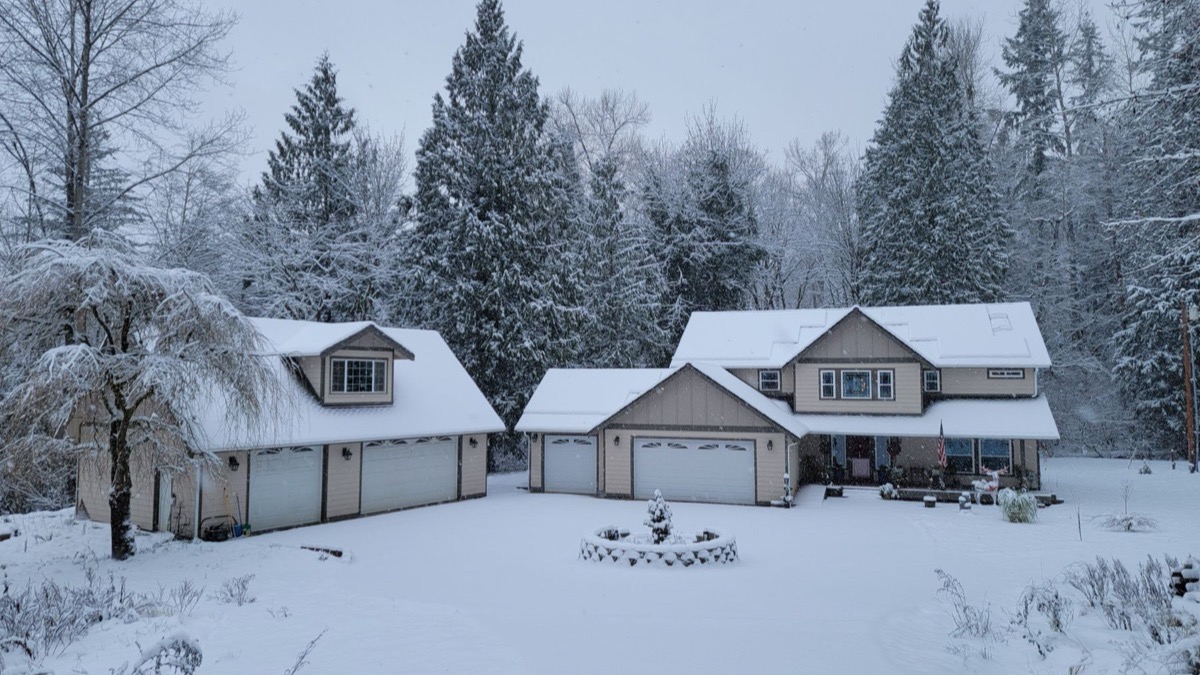
Roof snow removal means taking weight off your roof before it becomes a structural problem. It’s not the same job as sending a plow around your yard. Most pitched roofs in Greater Boston and on the North Shore get through a normal winter without any trouble at all.
Risk goes up in a few specific situations: heavy, wet snow sitting on the roof, storms stacking on top of each other with no thaw in between, or drift piling up on a flat or low-pitched section. Those are the conditions worth paying attention to. A single clean snowfall on a steep, well-built roof usually isn’t one of them.
Wet snow is heavier than it looks
Depth alone doesn’t tell the whole story. Dry, fluffy snow is light. Wet, packed snow can weigh several times more per cubic foot. Fluffy snow can also soak up a later rain and get heavier without another flake falling. That’s the real thing to watch for: a thick snowpack followed by warm rain, or repeated storms with no melt between them. Add drift against a dormer or a low roof section, and the load adds up fast.
Don’t scrape down to bare shingles
When we clear a roof, we shave the snow down to a couple of inches rather than pulling it all the way to bare shingles. Scraping too hard tears at the roofing material underneath. We work from the ground with a long-handled snow rake, pulling snow off the edge and working upward with a plastic tool instead of metal. Metal blades and aggressive scraping cost granules and shingle life for very little extra weight removed. A thin, safe buffer of snow left behind beats a roof that’s stripped clean in January and leaking by spring.
Eave clearing helps with ice dams, but it isn’t the fix
Clearing snow off the eaves before melt-and-refreeze cycles set in can slow down an ice dam from forming. Keeping gutters clear helps too, since it gives meltwater somewhere to go. But raking the eaves doesn’t remove a dam that’s already formed, and it won’t fix a house that dams the same way every winter. If that’s your pattern, the real fix usually starts in the attic, not on the roof.
When to stop clearing and get out
Some warning signs mean stop and leave the house, not clear harder. A sagging roofline, cracked or split wood, doors that suddenly stick or pop open, bowed ceilings, or creaking and popping sounds all point to a structure under real stress. If you see or hear any of that, leave right away and call from outside.
It’s also worth checking that snow hasn’t blocked your furnace or dryer exhaust vents. A blocked vent can send exhaust back into the house instead of outside.
KMK Roofing sends an insured crew up on the roof only when access is genuinely needed, and we don’t add a person’s weight to a roof that’s already under stress. If you’re seeing any of the warning signs above, get in touch before anyone climbs up.